
If you sleep on your back, you may be exacerbating your sleep apnea. This is because when you’re in the supine position, your tongue and the soft tissues in your throat are more likely to slump down and block your airway thanks to gravity!
For many people, adopting a non-supine sleep position, such as side sleeping, can reduce how often the airway collapses. The side sleeping position keeps your airway open and reduces your chances of airway obstruction while you snooze.
Avoiding sedatives for sleep apnea is a must because these substances can relax the muscles in your throat too much, which could worsen airway blockages. If you’ve been looking for natural home remedies for sleep apnea, there are various anti-inflammatory herbs to help sleep apnea. Remember, before trying new things, check with your doctor.
A Range of Sleeping Positions
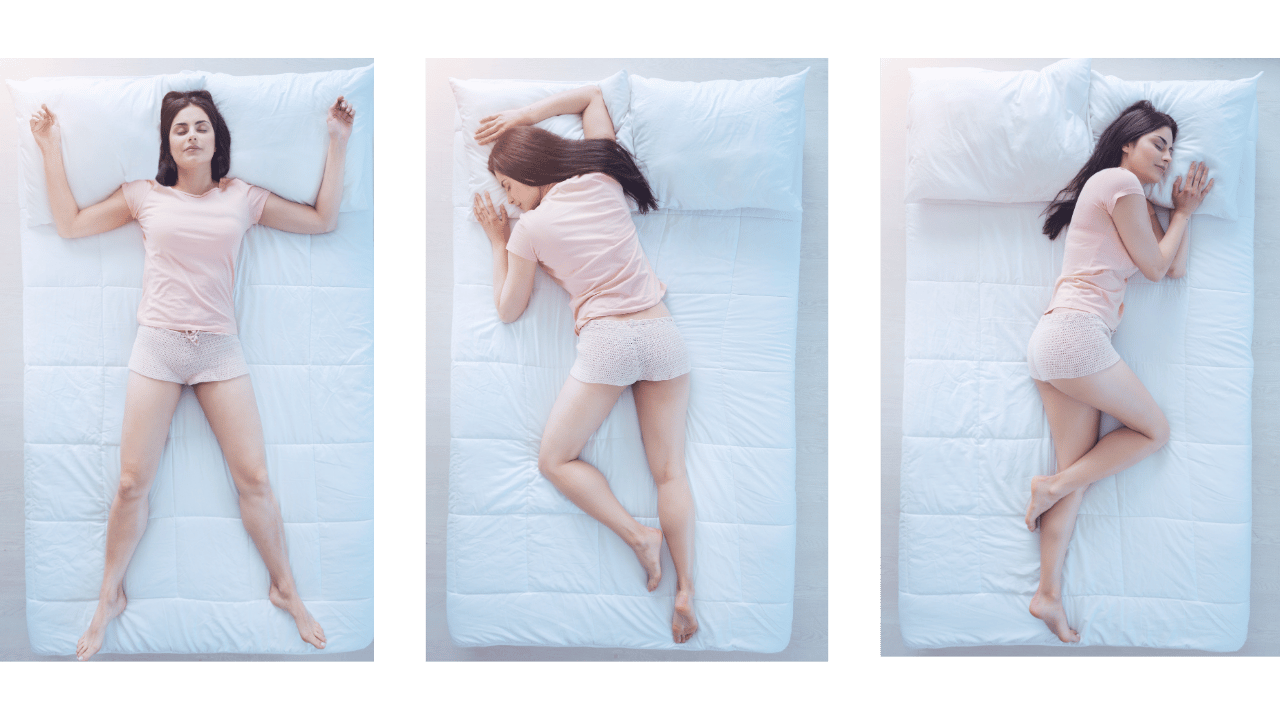
‘People typically notice some sleeping positions to reduce apnea events compared to others. Let’s break them down:
- Supine position: A term used to describe sleeping on your back, the ‘supine position’ is one of the least effective positions for those struggling with sleep apnea. It can be great for neck or back pain, but it often increases the frequency of apnea events and thus can worsen sleep apnea symptoms as well as leading to an increased chance of acid reflux problems.
- The side-sleeping position can be a game-changer for anyone with sleep apnea because it uses gravity to help keep airways open, which is why many notice less snoring in this position. Using pillows to prop yourself up can make your side-sleeping experience even better.
- Prone position: Usually one of the least recommended sleep positions, sleeping on your stomach can benefit those with sleep apnea. It may open up your airway and allow for better breathing, but it’s possible you could wake up with a sore neck or back.
- Combining positions: Some people switch between sleeping positions throughout the night. If you’re a combination sleeper, try zeroing in on side-sleeping for the best overall night of sleep. That said, review your sleep tracker data and see what actually works best. Some sleep study reports share information on how bad your apnea events were in each sleep position that you spent time in. It’s important to be mindful of how frequently you sleep on your back, as this could impact your sleep quality.
How to Transition Your Sleep Position
If you’ve slept on your back most of your life, it’s likely going to be hard to break that habit. Start slowly by making a conscious effort to fall asleep on your side every night.
Supportive pillows can also make a big difference. Body or wedge pillows can keep you from rolling onto your back, and side-sleeping-specific pillows support your neck and shoulders. Creating a comfortable sleep environment and consistently making the adjustments you need will help your body adapt over time. Keep in mind that persistence in creating a new habit makes a difference.
Managing Your Sleep Apnea
While changing your sleep position could provide you with some relief, it’s not the ultimate sleep apnea solution. Many people who use positional strategies notice that over time, their sleep and breathing worsen even as they maximize their position. This is because gravity isn’t the only variable affecting breathing.
If you want to support easier breathing during sleep, it’s important to re-train breathing patterns before bed to allow the body to continue that calming pattern at nighttime. Dylan Petkus, MD shares the specific breathing routine he used to become free from his CPAP in his book, Sleep Apnea Solution. In the book, you will learn the breathing routine that can set yourself up for calmer, more restful nights and more energized days!