L-theanine normally stays in your body for approximately eight hours after ingestion, and its effects will kick in within thirty minutes and last for about seven hours. However, this duration depends on several factors including the dosage taken, whether it was taken after a meal or on an empty stomach, and your metabolism.
Understanding these factors before you take L-theanine supplements is important because you’ll know how it works, when to take it, and what to expect. It’ll also help you avoid possible side effects, like weird dreams from L-theanine.
What Determines How Long L-Theanine Lasts in Your Body?
Let’s discuss the factors that help you use L-theanine effectively to enhance your natural sleep:
Dosage
How much L-theanine can you take? Taking the right dosage of L-theanine is important because it determines the kind of effect you experience and the length of time you experience it.
Anything between 200 and 400 milligrams of L-theanine is considered a high dosage and it’s likely to cause more pronounced effects. For instance, because L-theanine helps to improve your mood and reduce anxiety, a higher dose might throw you into a frenzy or reduce your reaction time to situations that require your full attention.
Does L-theanine help sleep? It can, but exceeding the recommended dosage can also cause you to oversleep or feel lethargic during waking hours. Taking a larger dosage of L-theanine means that there will be a higher concentration in your bloodstream and your body will require more time to process it.
A lower dosage of L-theanine falls between fifty and one hundred milligrams. Although this dosage will still give you a calming effect, it’s usually milder and doesn’t last long. This is suitable for beginners because it can offer relaxation without making you feel sedated.
Now, remember with any supplement, different people react differently. Some people notice a big effect with a small amount so most people like to start low and go slow. Some start with a sprinkle even and increase from there. And remember, there’s always value to discussing this with your medical provider so they can advise!

Metabolism
Your natural body metabolism rate can determine how quickly or slowly it takes for the effects of L-theanine to wear off. People with a slower metabolism often experience the effects for extended durations, even when they take lower doses.
Those with a faster metabolism may feel the relaxing effect for a shorter period, thus requiring a higher dose to attain the same intensity and duration as someone with a slower metabolism.
With or Without Food
You can take this amino acid after a meal or on an empty stomach. Taking L-theanine on an empty stomach can speed up its absorption and result in a more intense effect, which can either be exactly what you want or lead to side effects.
Secondly, consuming L-theanine with a meal means it will compete with other amino acids for metabolism and absorption. This reduces the amount of L-theanine absorbed into your bloodstream, lowering the intensity and duration of the calming effect.
L-Theanine Summary
The concentration of L-theanine in your body will reduce by half after about five hours. The effect will also begin to wear off gradually, depending on the dosage and rate of metabolism.
The relaxing effect may continue a little longer even as your body metabolizes and expels more L-theanine. Generally, things will begin to normalize after eight hours.
Other Natural Ways to Support a Calmer Nervous System
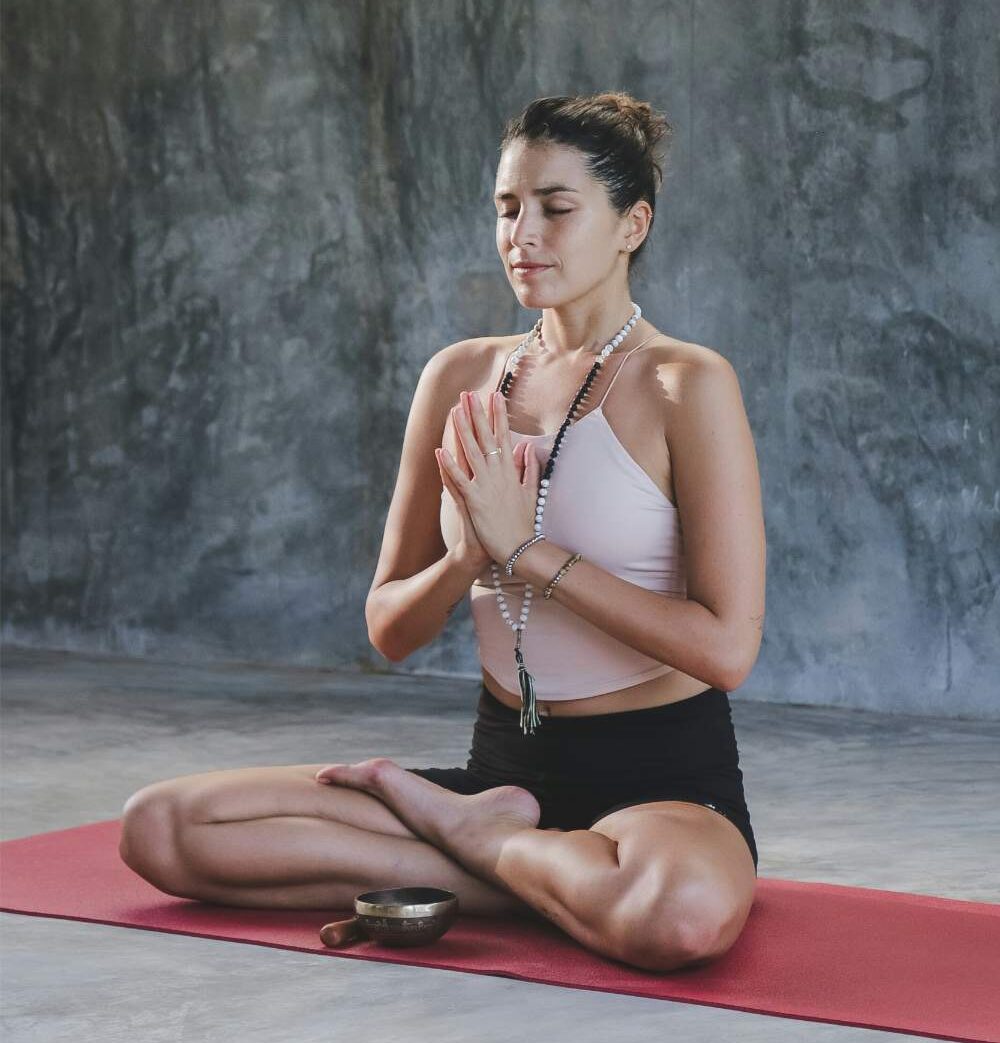
There are many different ways to move through the fight-or-flight feeling that can be turned on a bit too long. Most people prefer to have a number of tools in their tool kit. Yes, some people find l-theanine can dial the sympathetic response back a bit. It can also be very helpful to incorporate a breathing exercise you can use in the moment when you need the vagus nerve to kick in, with some calming signals.
Many people find it even more effective to integrate a regular breathing routine to their bedtime or morning routine. One of the most effective breathing exercises is Bhramari Pranayama, which people even find can set them up for more restful sleep. Another simple and well-known technique is Box Breathing, which is like it sounds. You inhale, hold, exhale, hold, and repeat for the same count. For example, inhale for 4 seconds, hold for 4 seconds, exhale for 4 seconds, hold for 4 seconds.
Now, with any breathing technique or lifestyle change, it’s important to listen to your body and not push it. People have different starting capacities and oxygen metabolism. So, if a hold time is too challenging, shorten it! Your box may look a bit different than someone else’s, but if your main goal is to relax the nervous system, don’t treat it like a competition. Some people might even need to eliminate all holds and just focus on counting their inhale and exhale.
And remember, when changing anything in your routine, make sure your medical provider is consulted and can help you figure out what is most appropriate for you. Cheers to filling up your tool belt with more techniques to calm your nervous system.